
Nexon Medical
EnSight Biportal
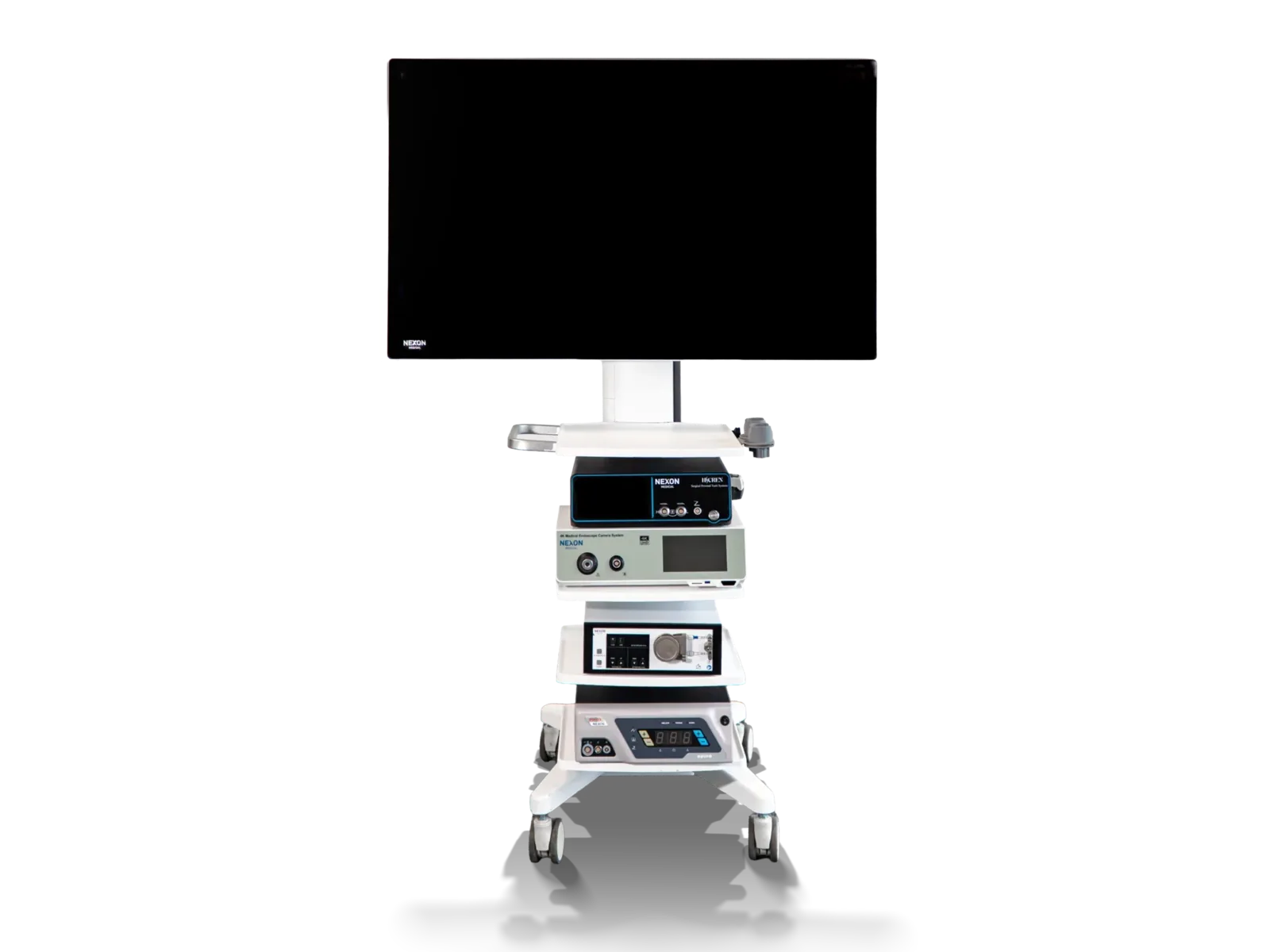
A complete solution for unilateral biportal endoscopic spine surgery (UBE): 4K endoscopic tower, Plasma and RF electrodes, dedicated instruments and an endoscopic drill.
Product page


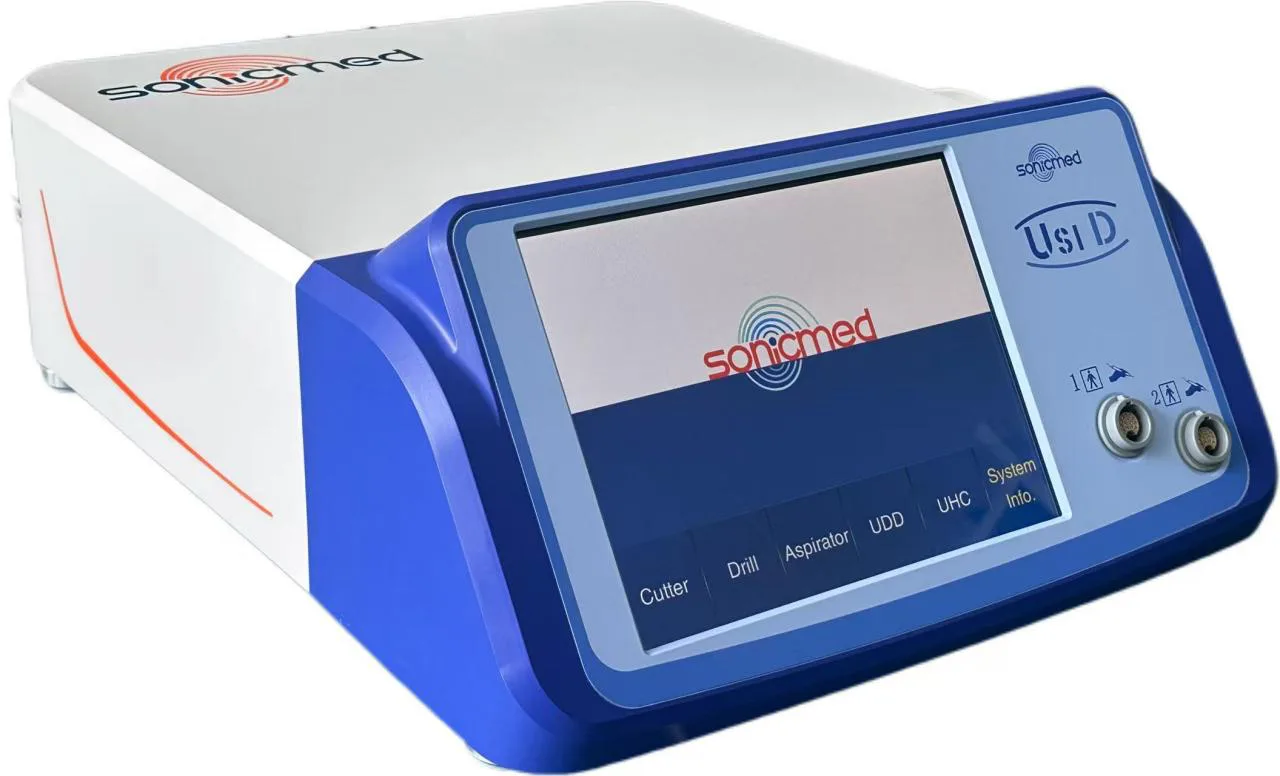
An ultrasonic surgical platform: the 5-in-1 Dual-Active console takes the bone cutter, the bone drill, the ultrasonic aspirator (CUSA), the debridement handpiece and the haemostatic shears, with two handpieces active at once.
The SonicMed ultrasonic surgical system combines three functions in one unit: bone cutting, bone drilling and ultrasonic tissue aspiration. The console accepts two different handpieces at the same time, so the team moves from one function to another without changing devices.
The newest console, SONICMED Dual-Active (USID), is modular and compatible with the full range of SonicMed handpieces: bone cutter, bone drill, ultrasonic aspirator, debridement, haemostatic shears and thyroid shears. Two interfaces can work simultaneously, so one console covers debridement, aspiration, bone cutting and haemostasis. The functions also exist as separate systems: the USI1003 aspirator, the USI1004 bone cutter and drill (40 kHz), the USI1005 combined system (cutting and drilling at 40 kHz, aspiration at 30 kHz), USI1001 debridement, UCHP1008 haemostatic shears and the BUC2000 combined ultrasonic-bipolar device, which seals vessels up to 7 mm in diameter.
The ultrasonic aspirator (CUSA) fragments tissue by cavitation: ultrasonic vibrations create pressure changes within the cells, and the tissue breaks into small fragments that are then aspirated through the tip. The manufacturer describes a tissue selectivity that helps protect vessels and nerves and reduce bleeding, for example in meningioma resection and the excision of intramedullary tumours.
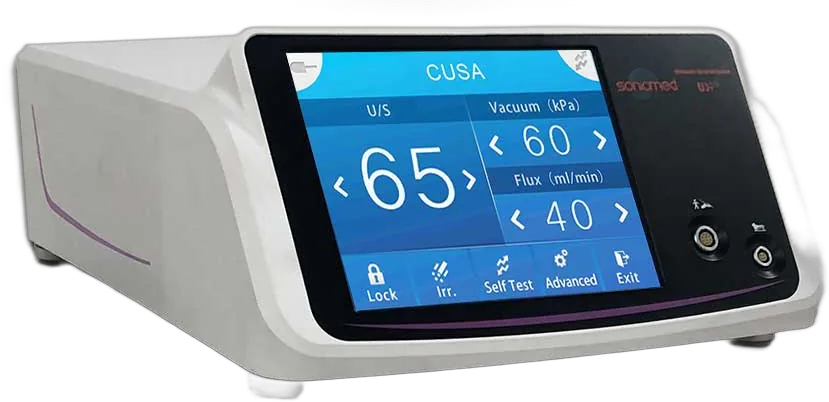
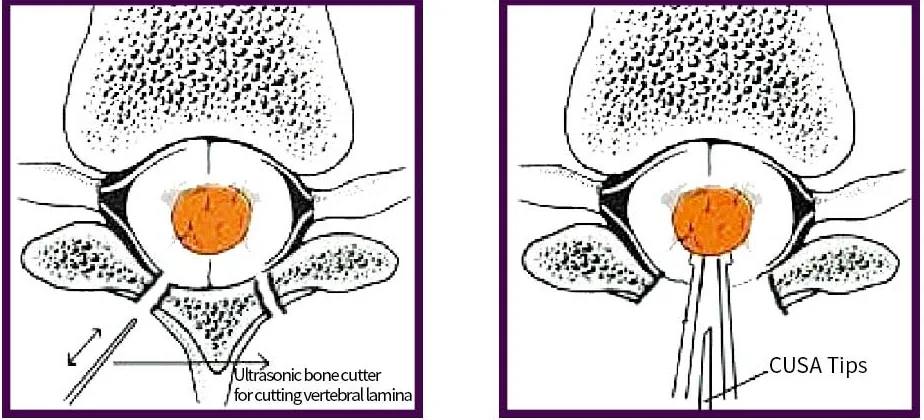
The ultrasonic bone cutter is used, for example, to cut the vertebral lamina, with reduced impact on soft tissue, according to the manufacturer. Ultrasonic power, vacuum and irrigation are set on the touch screen, and the range of tips covers most operative situations.
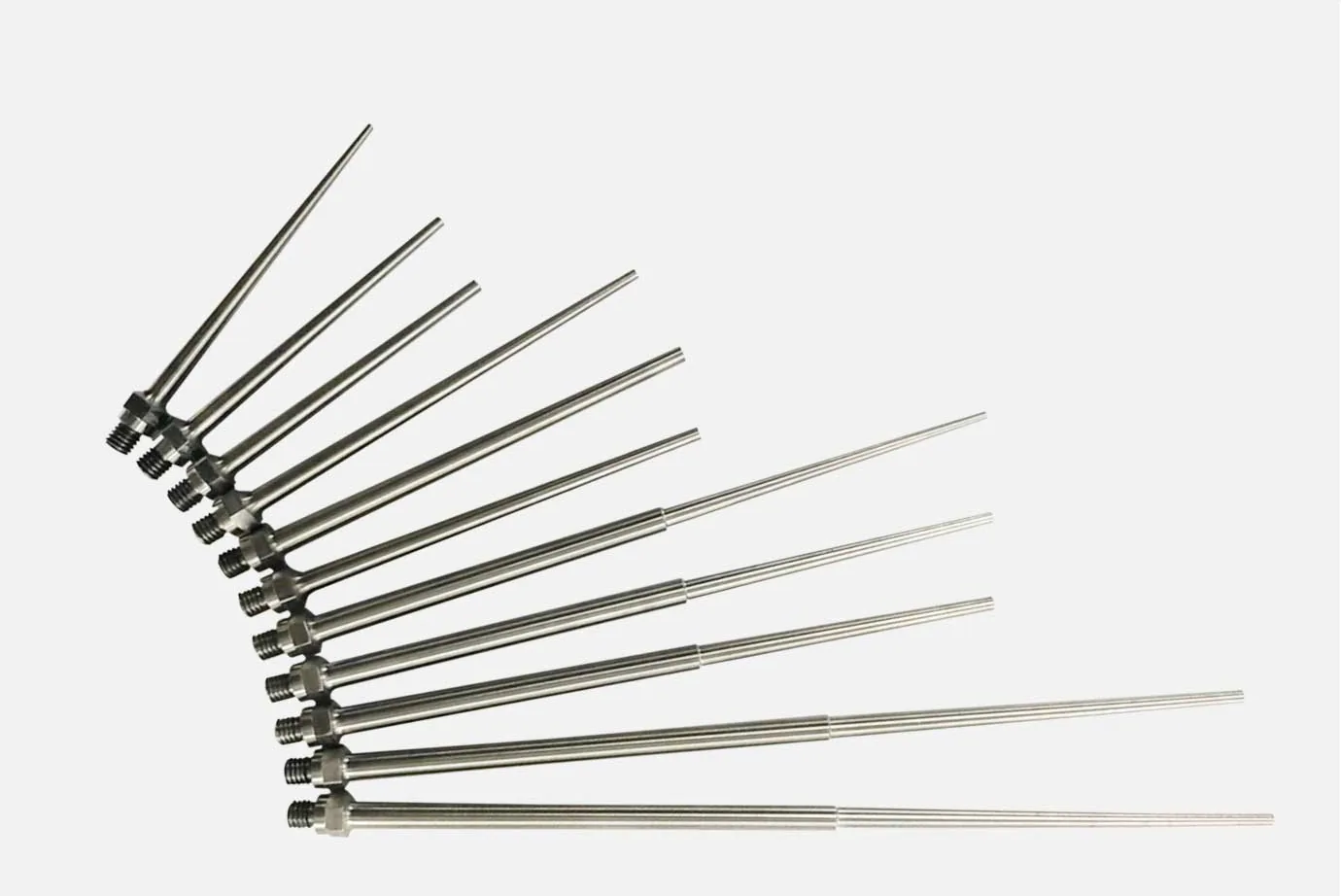
For minimally invasive spinal surgery there are long bone cutter and drill tips (130-320 mm) that work through working channels of more than 2.8 mm, under transforaminal or biportal (UBE) endoscopy or through tubular retractors: resection of ossified ligamentum flavum and osteophytes, decompression of the spinal canal and lateral recess, foraminoplasty.
| Console | SONICMED Dual-Active (USID), 5-in-1, two interfaces active simultaneously; USI integrated system |
|---|---|
| Dedicated systems | USI1001 debridement; USI1003 aspirator; USI1004 cutter and drill (40 kHz); USI1005 cutter, drill and aspirator (40/30 kHz); UCHP1008 haemostatic shears; BUC2000 ultrasonic-bipolar (vessels ≤ 7 mm) |
| Minimally invasive tips | Cutter and drill, 130-320 mm, Ø 2.5-5 mm; working channel above 2.8 mm |
| Handpieces | Ultrasonic bone cutter, ultrasonic bone drill, ultrasonic aspirator (CUSA) |
| Handpieces connected simultaneously | 2 |
| Adjustable parameters | Ultrasonic power (%), vacuum (kPa), irrigation (ml/min) |
| Principle (aspirator) | Ultrasonic cavitation fragmentation and aspiration |
| Marking | CE 0123, according to the manufacturer’s catalogue |
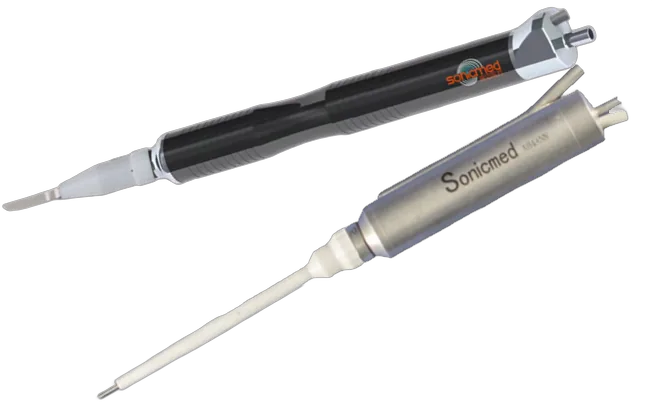
The tip vibrates at ultrasonic frequency and produces cavitation: pressure changes break the tissue into small fragments, which are then aspirated through the tip. The manufacturer describes a tissue selectivity that helps protect vessels and nerves, for example in the resection of meningiomas and intramedullary tumours.
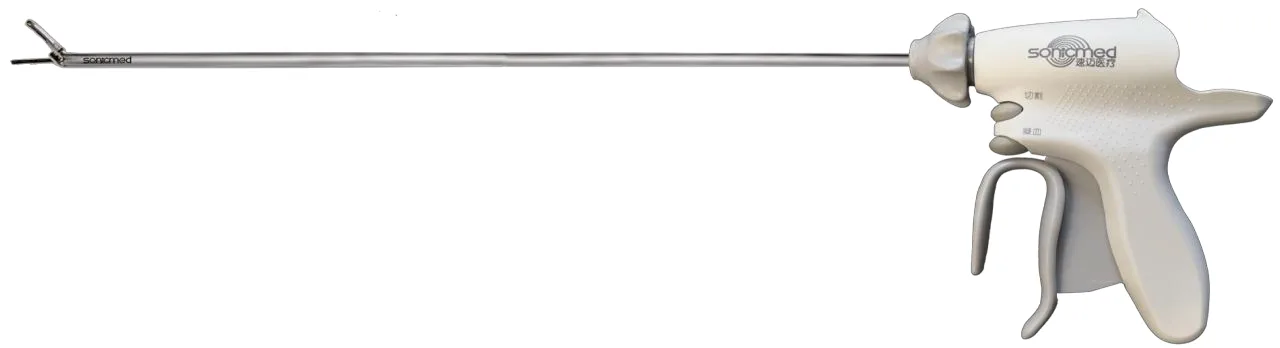
The 5-in-1 Dual-Active console takes the bone cutter, the bone drill, the ultrasonic aspirator, the debridement handpiece and the haemostatic shears; two handpieces can work at the same time. Ultrasonic power, vacuum and irrigation are set on the touch screen.
For precise bone cuts, such as cutting the vertebral lamina in spine surgery, with reduced impact on soft tissue according to the manufacturer. It is also used in maxillofacial surgery and bone oncology.
No. SonicMed uses resterilisable, reusable tips, which lowers the cost of consumables per procedure.
Product
Ultrasonic surgical system
SonicMed
Fill in the form and we will get back to you shortly, usually within the same working day.
A complete solution for unilateral biportal endoscopic spine surgery (UBE): 4K endoscopic tower, Plasma and RF electrodes, dedicated instruments and an endoscopic drill.
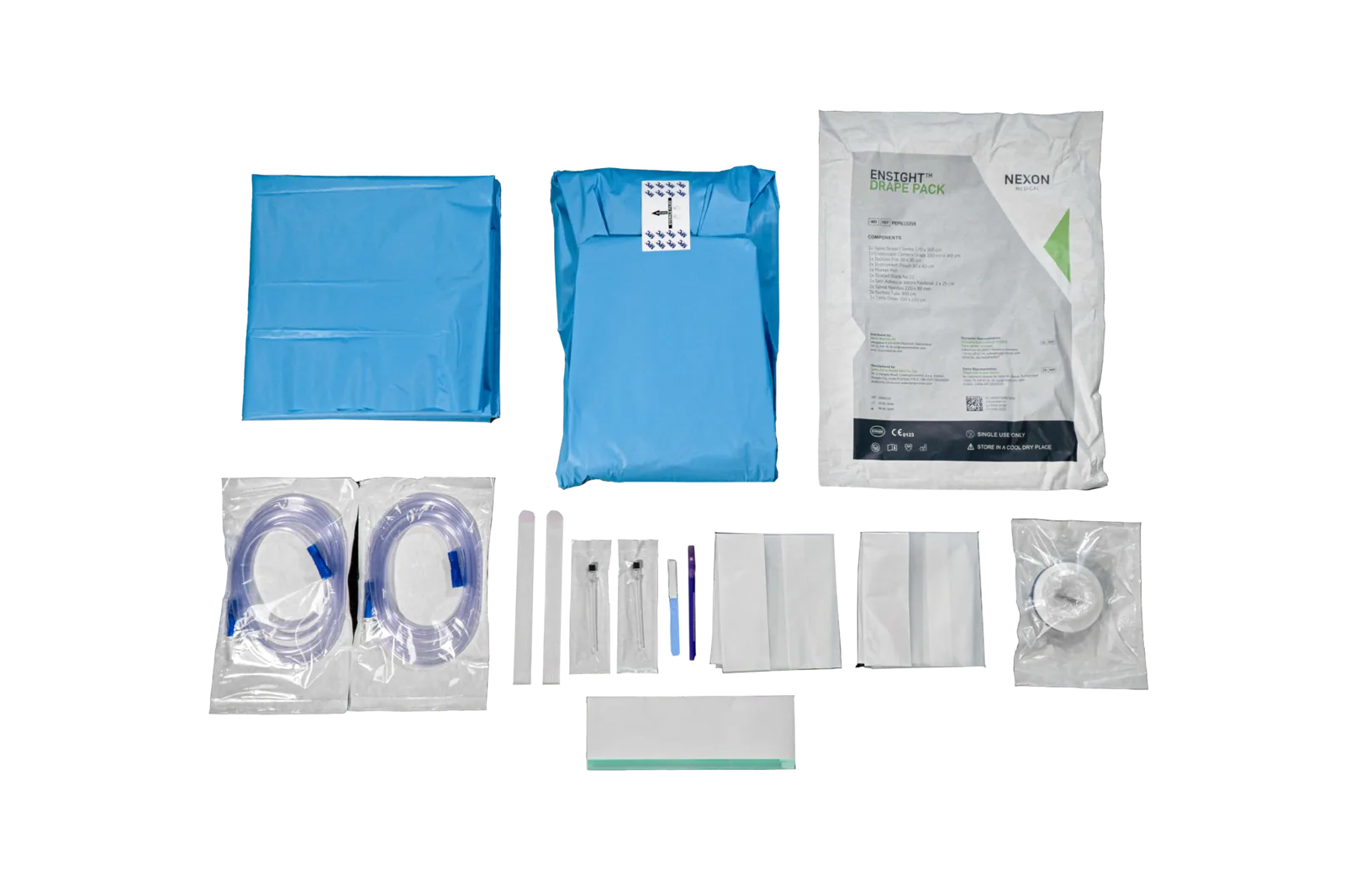
A complete sterile set for biportal and monoportal spinal endoscopy: drapes, camera cover, fluid collection and the small instruments needed, in a single pack.
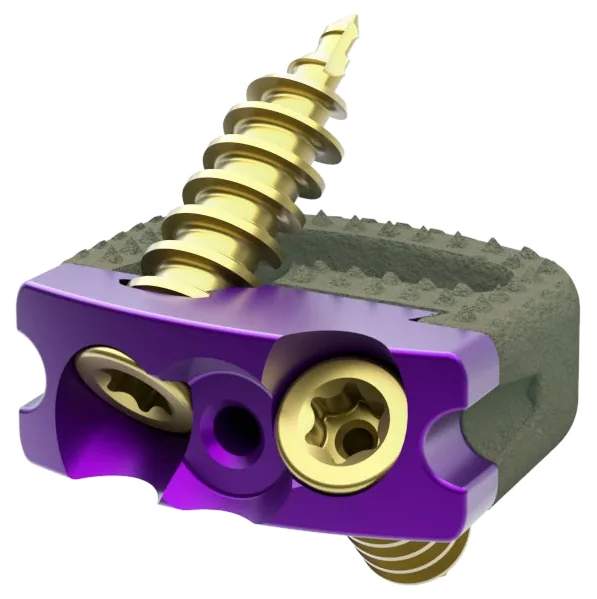
A modular anterior cervical fusion (ACDF) system that combines a TiPEEK interbody cage with an anterior plate: 4 plate types, rigid or variable fixation, 8 configurations.