
Nexon Medical
EnSight Biportal
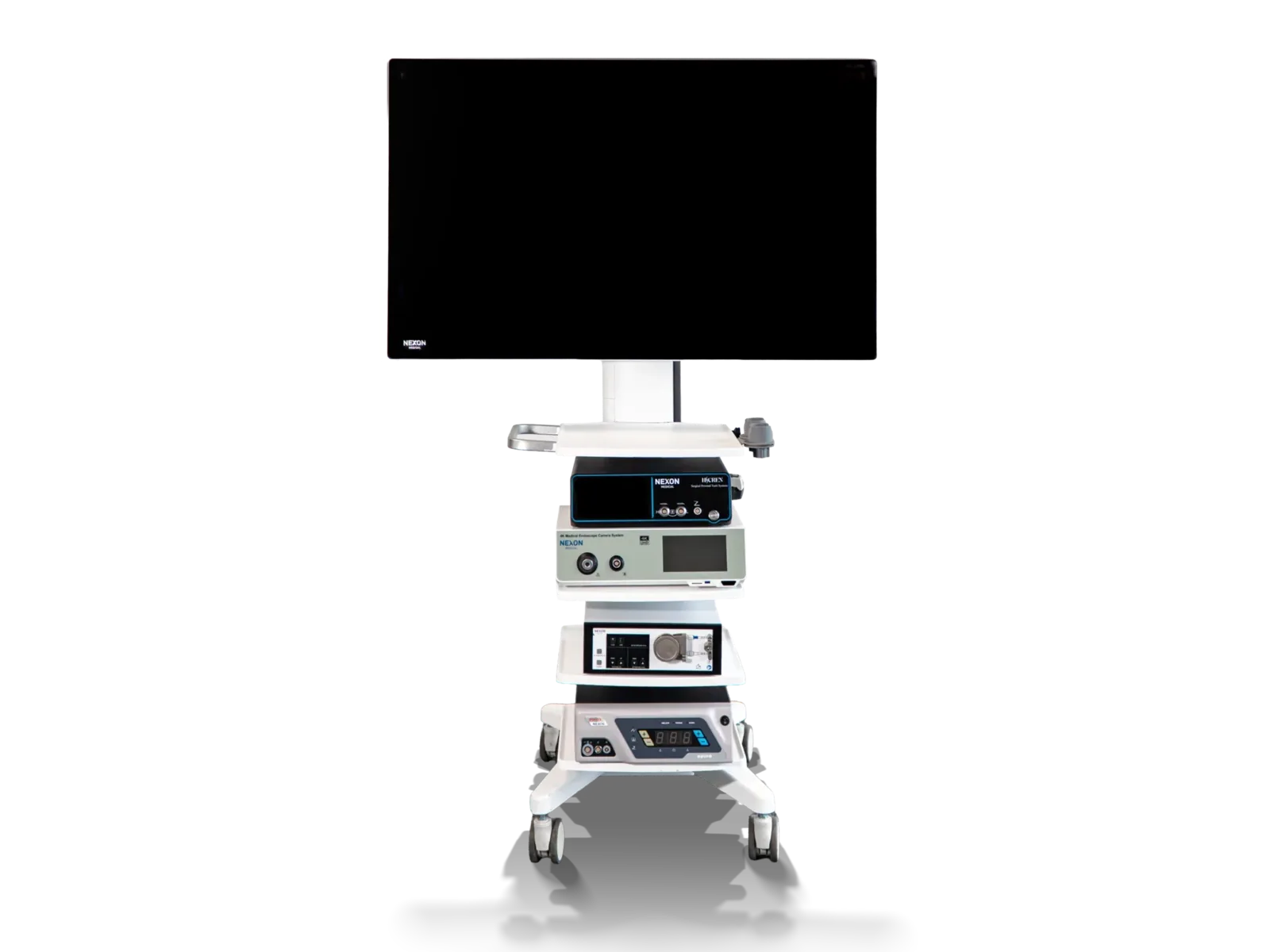
A complete solution for unilateral biportal endoscopic spine surgery (UBE): 4K endoscopic tower, Plasma and RF electrodes, dedicated instruments and an endoscopic drill.
Product page


A modular anterior cervical fusion (ACDF) system that combines a TiPEEK interbody cage with an anterior plate: 4 plate types, rigid or variable fixation, 8 configurations.
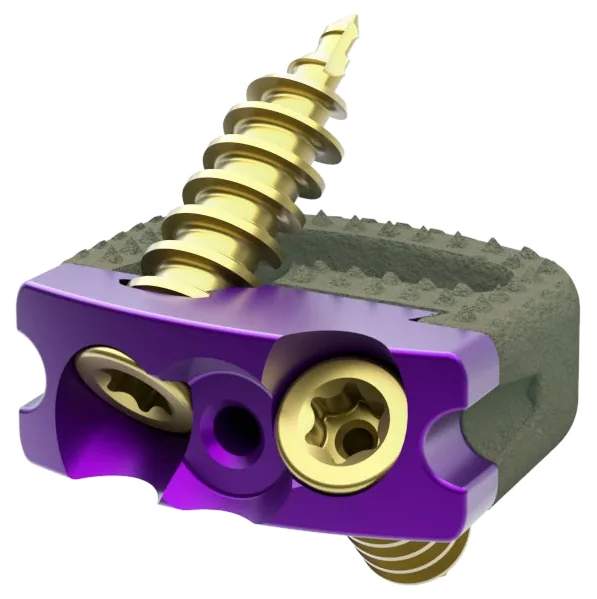
Mecta-C Stand Alone brings together in one implant the benefits of an anterior cervical plate and a radiolucent interbody cage. The cage comes in three footprints and eight heights, with a fixed lordosis of 7°. During surgery the surgeon chooses one of four plates, Flush, Hybrid, Trio or Quattro, and snaps it onto the cage with the dedicated instruments.
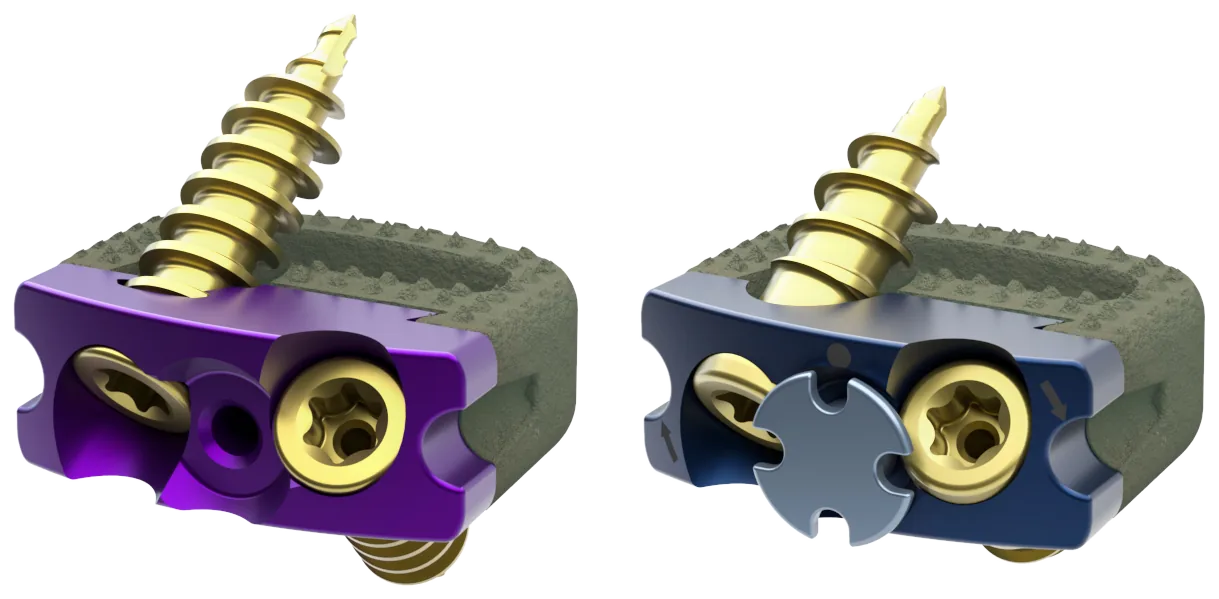
Each plate comes in two versions. Rigid fixation (purple plate) uses locking screws in a threaded plate, with an integrated anti-backout system. Variable fixation (blue plate) uses lag screws in an unthreaded plate that allows micro-motion and load distribution to the bone; the screws are secured with a central anti-backout screw supplied with the plate.
The cage is made of PEEK plasma-sprayed with a micrometric titanium layer (TiPEEK). Titanium markers allow the position to be checked on X-ray, and the wide central window is filled with bone graft. The system is contraindicated in spinal fractures, tumours and infections and in severe osteoporosis.
| Cage footprint (W × D) | 15 × 13, 16 × 14 and 18 × 15 mm |
|---|---|
| Cage height | 5-12 mm, in 1 mm steps |
| Lordosis | 7° |
| Cage material | Titanium-coated PEEK (TiPEEK), titanium markers |
| Plates | Flush and Hybrid: h6-h12; Trio and Quattro: h5-h12 |
| Rigid fixation | Threaded plate (purple), locking screws |
| Variable fixation | Unthreaded plate (blue), lag screws, central anti-backout screw |
| Screw diameter | 3.8 mm (primary), 4.2 mm (revision) |
| Self-drilling screws | 12-20 mm, in 2 mm steps |
| Self-tapping screws | 12-22 mm, in 2 mm steps |
| Levels | C2-T1 |
| Marking | CE 0476 |
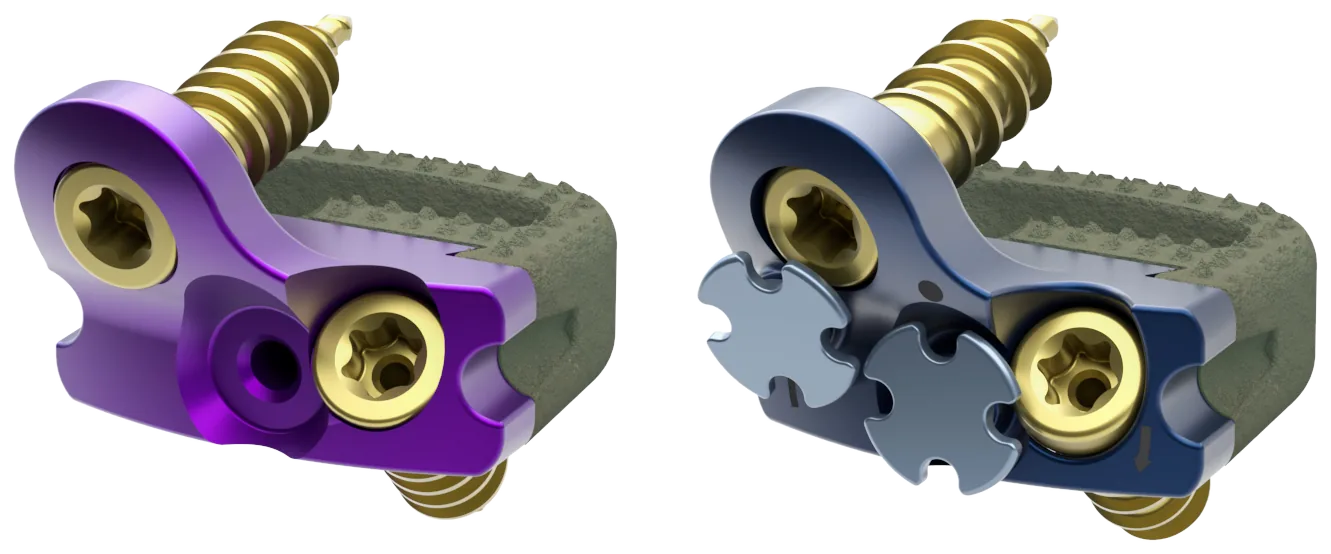
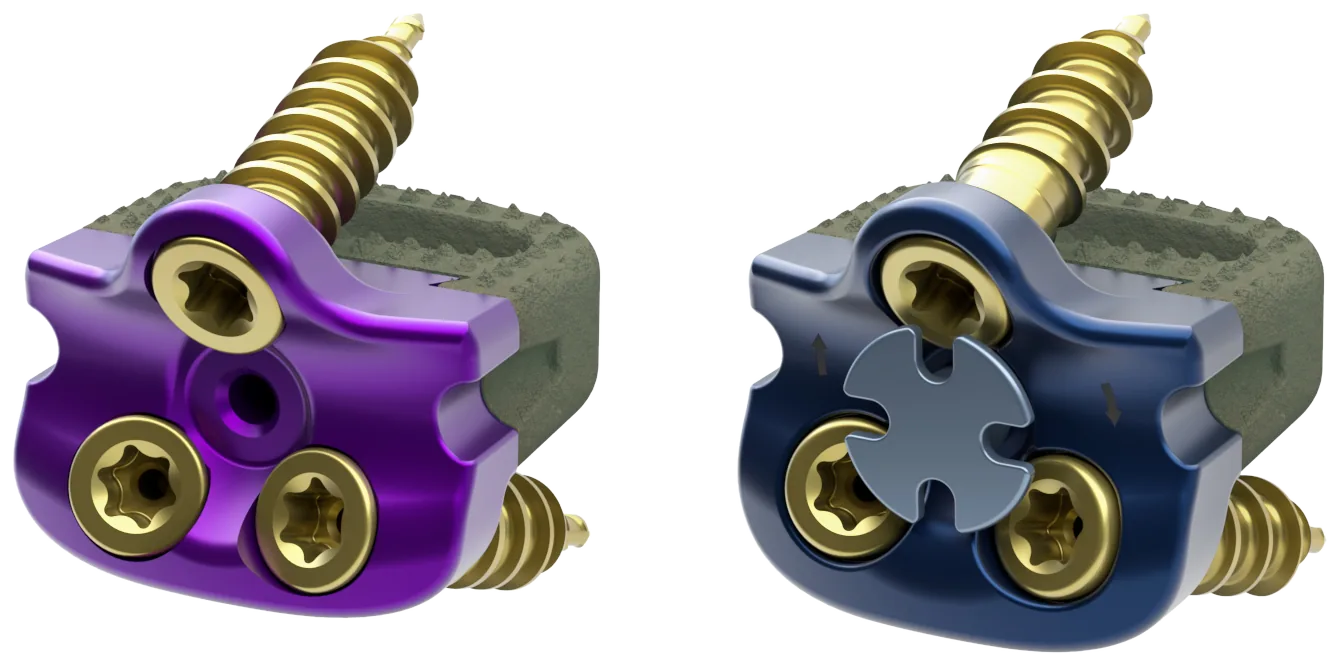
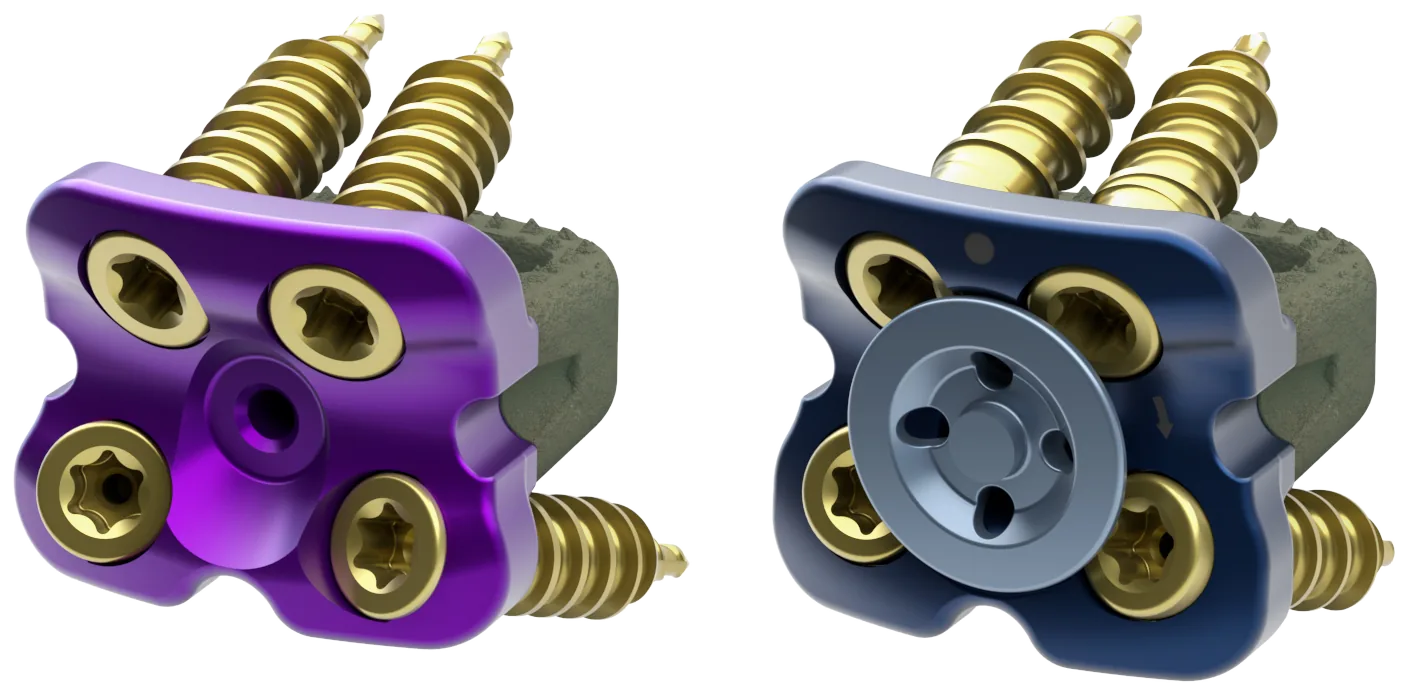
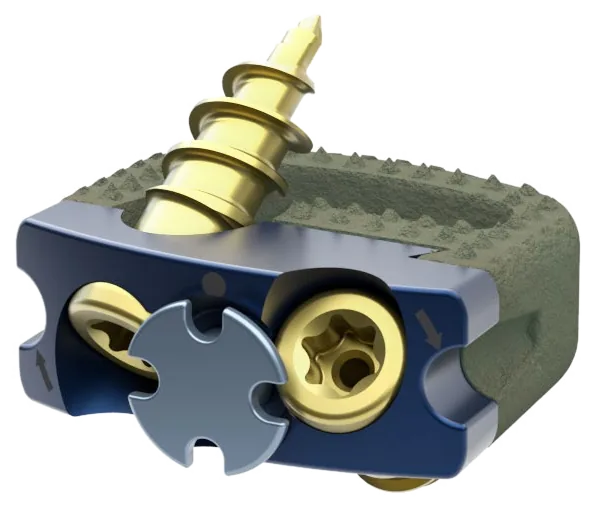
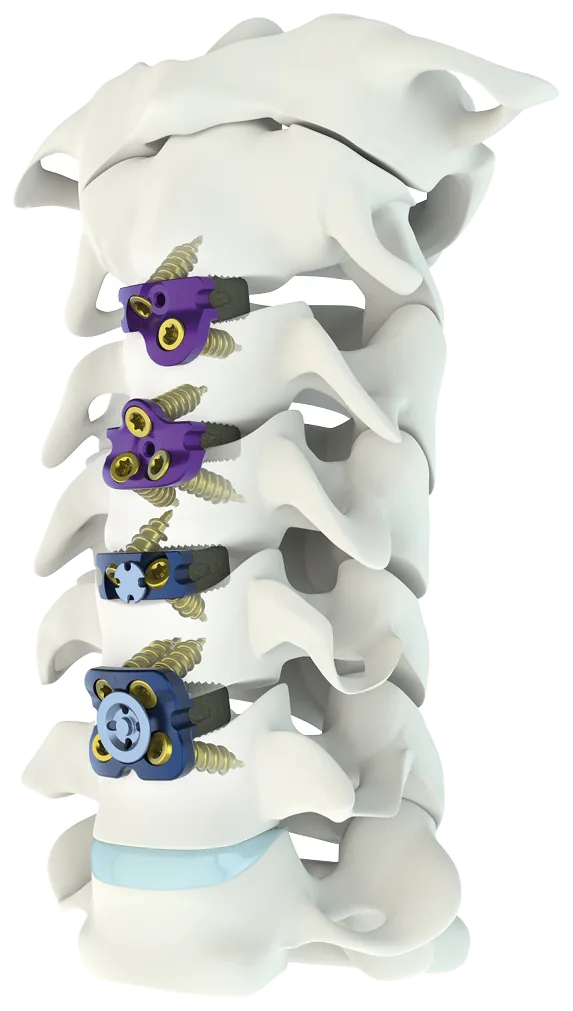
The interbody cage and the anterior plate form a single implant. The plate snaps onto the cage, and the screws pass through the plate into the vertebral bodies, so one construct does the job of both the cage and the cervical plate.
Rigid fixation uses a threaded purple plate with locking screws and an integrated anti-backout system. Variable fixation uses an unthreaded blue plate with lag screws, which allows micro-motion and load sharing with the bone; the screws are secured by a central anti-backout screw. Both versions exist for all four plates.
The Hybrid plate is designed for C7-T1 and, rotated by 180°, is used at C2-C3 to avoid the neighbouring anatomical structures. For multilevel fixation, the Quattro plate has two convergent and two divergent screws to limit interference with the adjacent level. Flush gives a zero-profile construct and Trio has three screws.
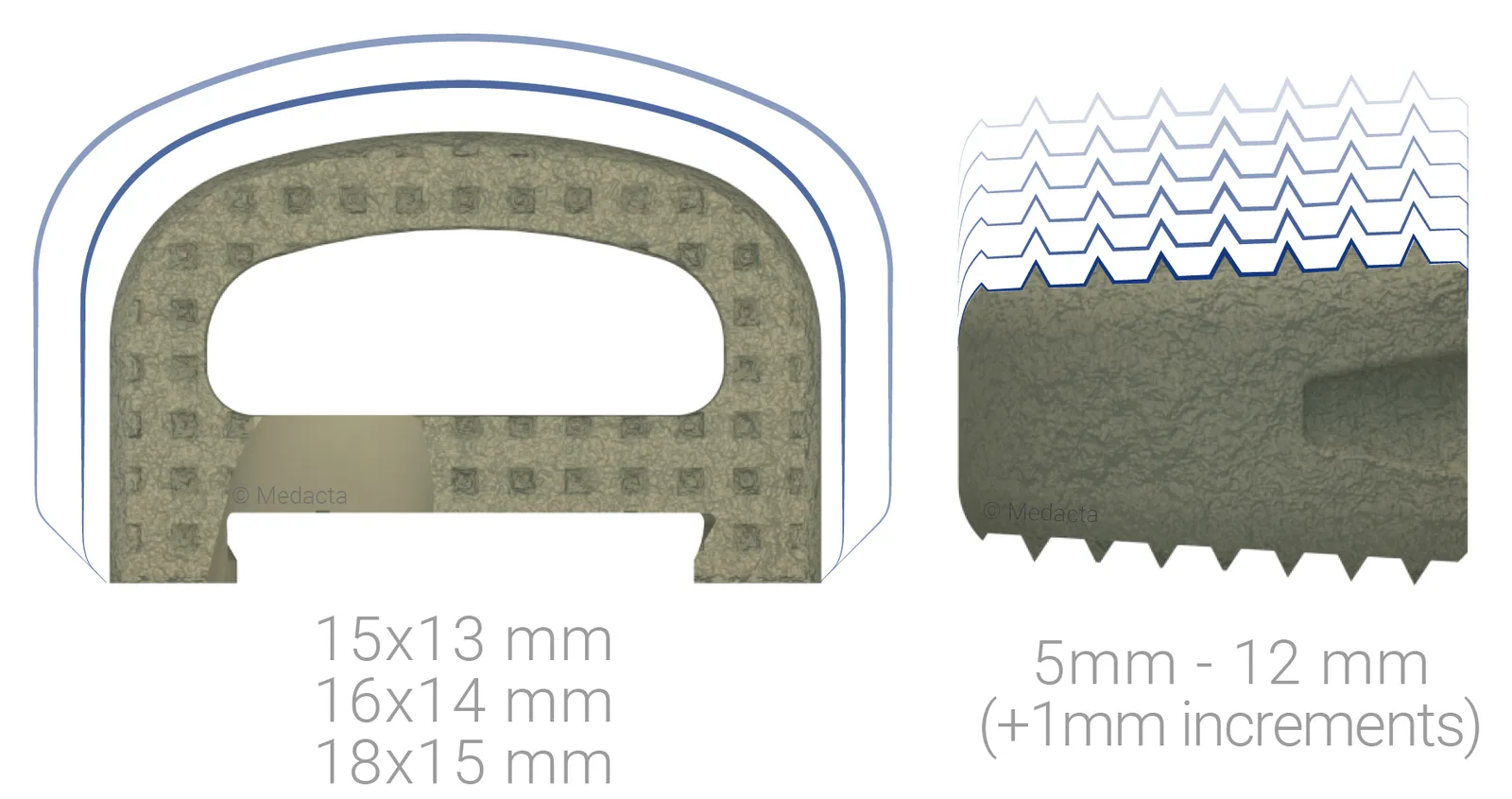
The cage comes in three footprints, 15 × 13, 16 × 14 and 18 × 15 mm, and in heights of 5-12 mm in 1 mm steps, with 7° of lordosis. It is made of PEEK with a micrometric titanium coating (TiPEEK), has titanium markers for radiographic control and a central window for bone graft.
Product
Mecta-C Stand Alone
Medacta
Fill in the form and we will get back to you shortly, usually within the same working day.
A complete solution for unilateral biportal endoscopic spine surgery (UBE): 4K endoscopic tower, Plasma and RF electrodes, dedicated instruments and an endoscopic drill.
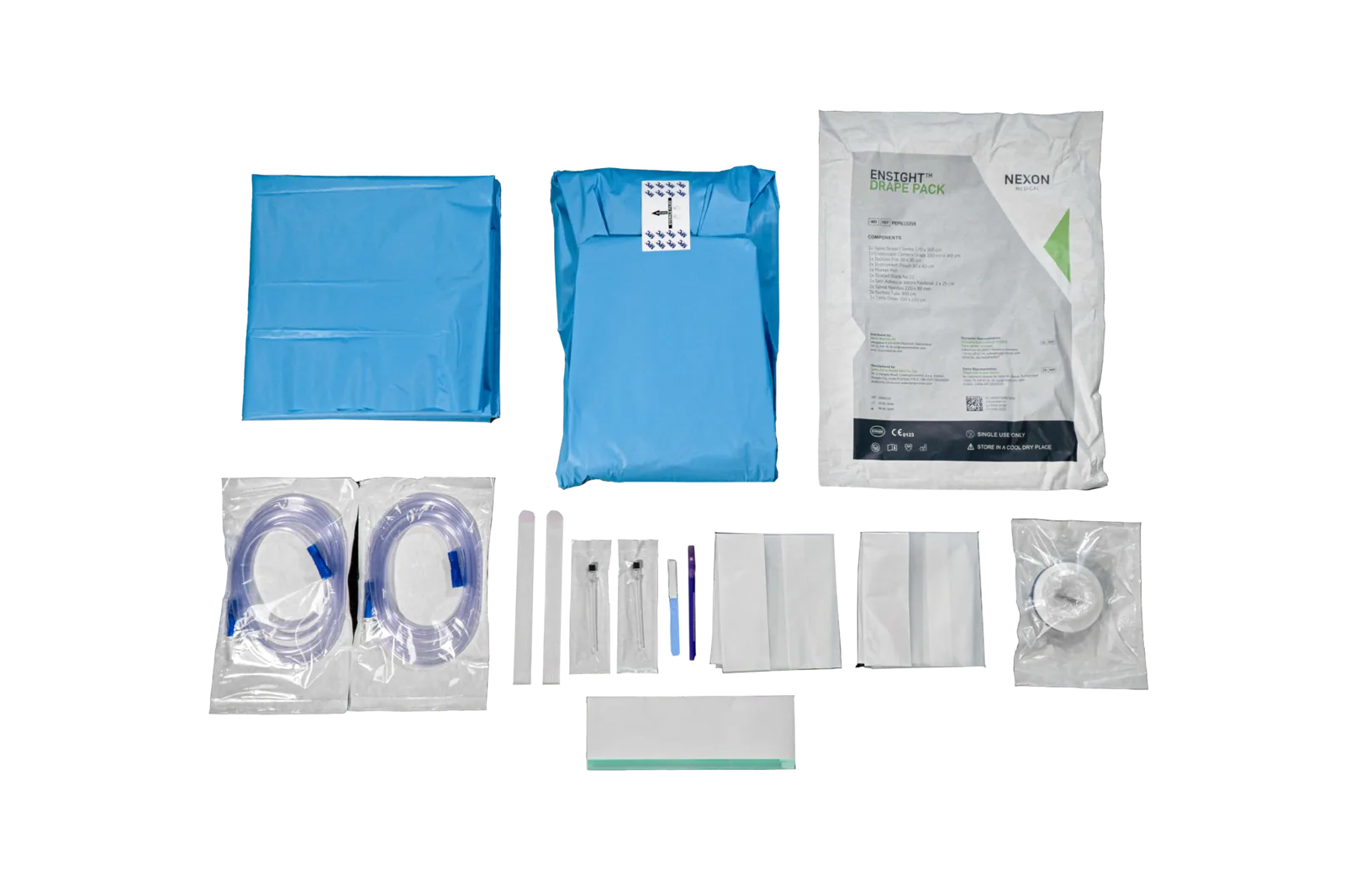
A complete sterile set for biportal and monoportal spinal endoscopy: drapes, camera cover, fluid collection and the small instruments needed, in a single pack.
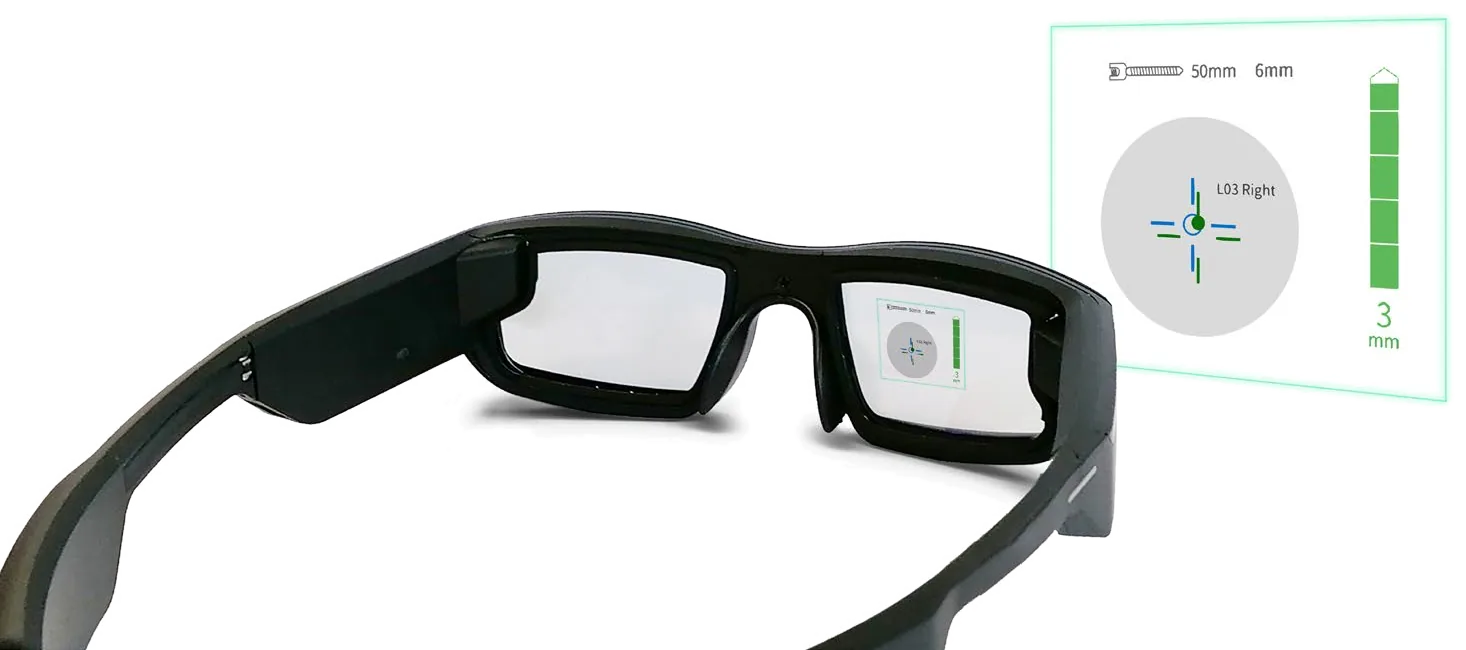
Augmented-reality navigation for spine surgery: guidance appears directly in the surgeon’s field of view through smart glasses, with compact sensors mounted close to the operated levels.