
MediThinQ
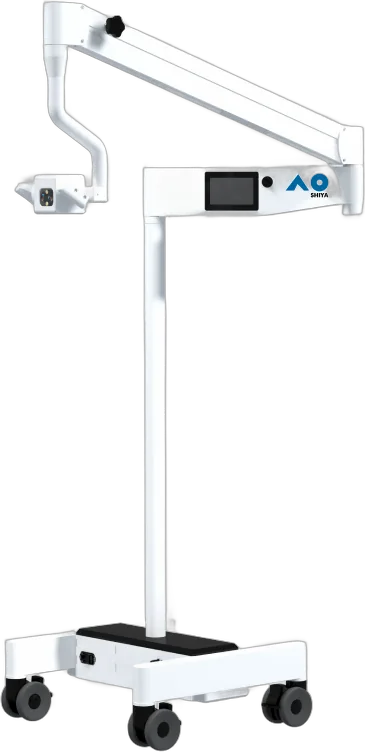
3D Microvision
A 3D exoscope on a mobile stand, with up to 20× zoom, autofocus and LED illumination. The surgeon sees the stereoscopic Full HD image on the SCOPEYE Feather display instead of through an eyepiece.
Product page


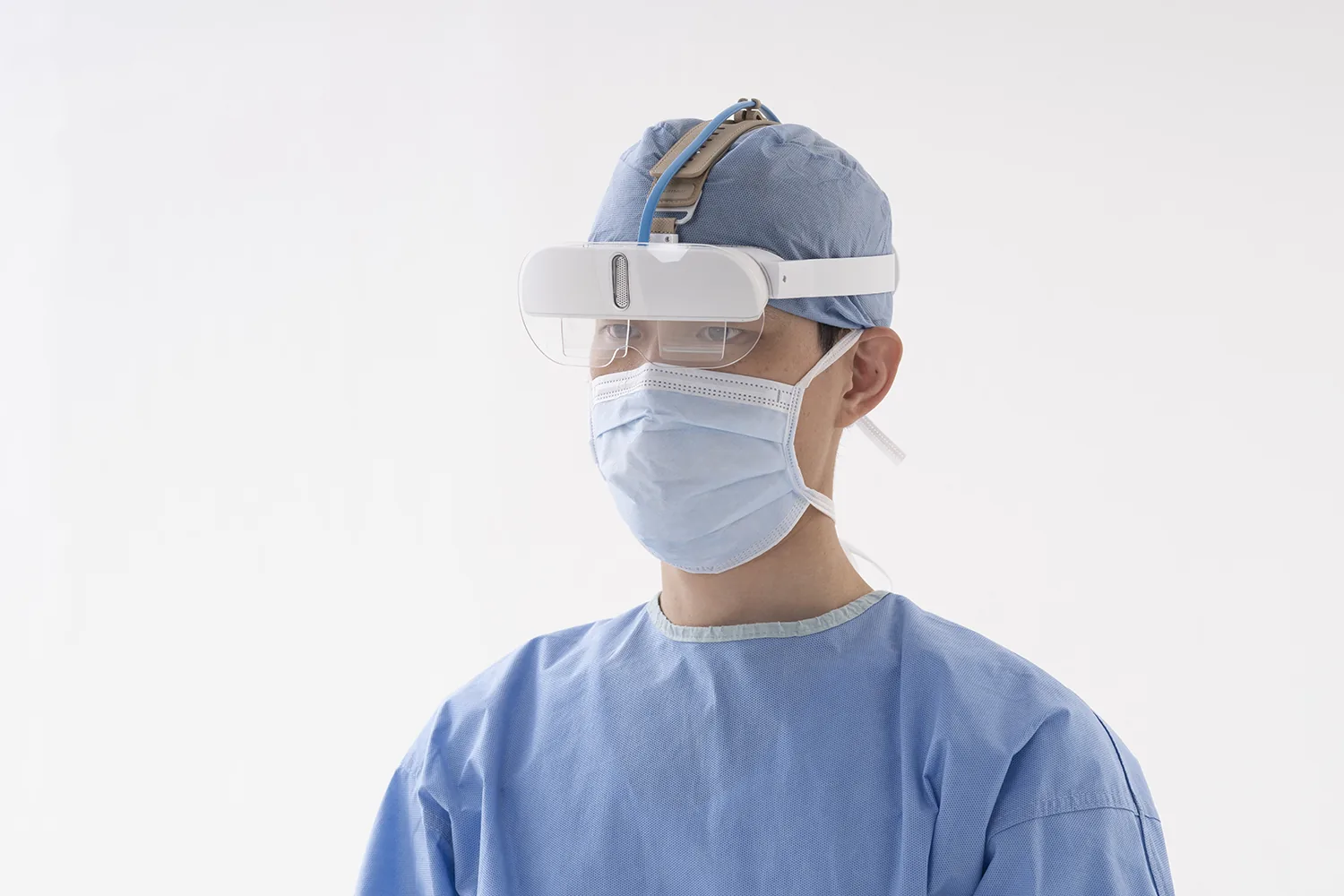
A head-mounted medical display that brings the 2D or 3D image from the equipment in the room in front of the surgeon’s eyes. Two models: SCOPEYE EUD (410 g) and SCOPEYE Feather (295 g).
SCOPEYE is a binocular head-mounted display (Eyes Up Display). It takes the image from the imaging equipment in the room, such as the endoscope, microscope, navigation system or surgical robot, and shows it in front of the eyes, in 2D or 3D. The surgeon sees the image and the surrounding surgical field at the same time, without keeping their eyes fixed on an eyepiece or a monitor.
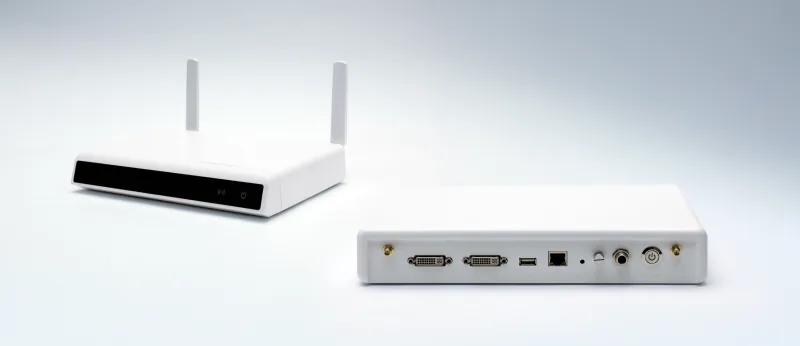
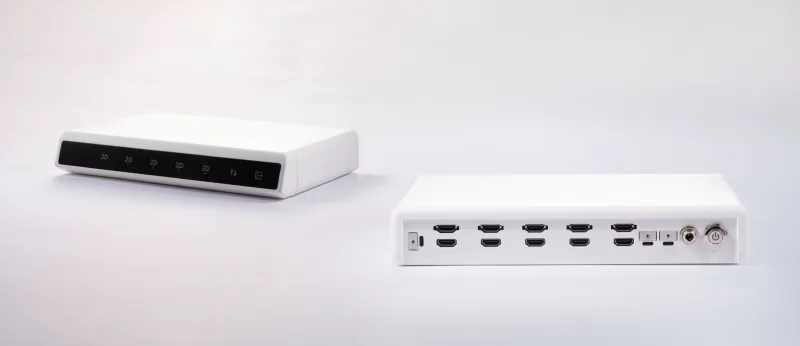
The display connects wirelessly, through a battery-powered transmitter and receiver, or by cable, through the Multi Processor, which combines the left and right channels of a 3D source. The flip function mirrors or inverts the image. The same 2D or 3D image can be shared with up to 200 users, for the team in the room or for trainees, in live broadcasts and in anatomy labs.
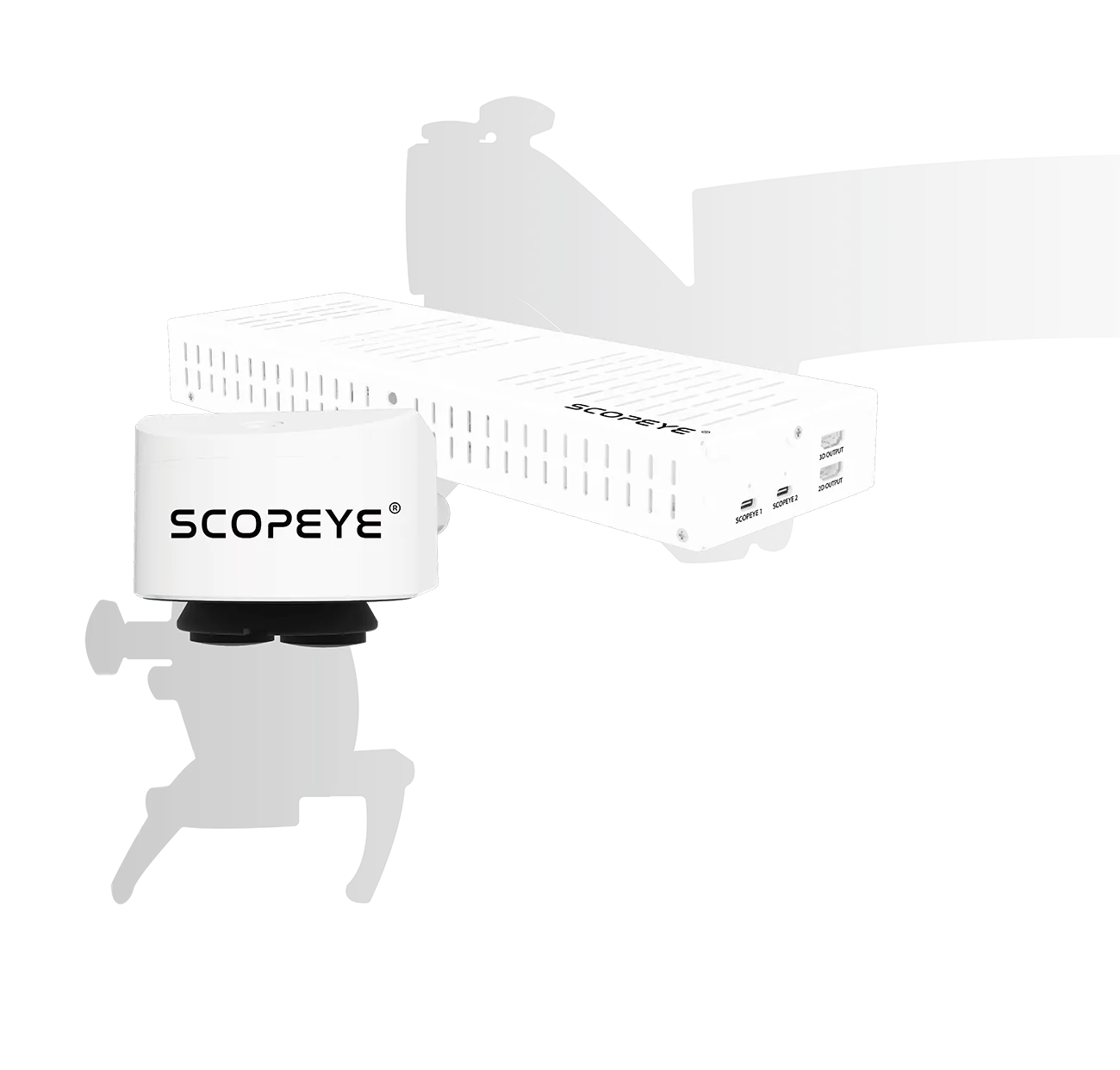
The 3D AddON module turns a surgical microscope with 2D-only output into a 3D one: an optical divider is mounted on the microscope (ZEISS, Leica, Nikon, Olympus and others), and the control unit sends the image to SCOPEYE and to a monitor. For microsurgery without a conventional microscope, SCOPEYE Feather works with the 3D Microvision exoscope.
| Models | SCOPEYE EUD; SCOPEYE Feather |
|---|---|
| SCOPEYE EUD | Binocular, light guide, top-down display; 1920 × 1080; 40° field of view; 410 g |
| SCOPEYE Feather | Binocular, detachable visor; 1920 × 1080, 60 fps; 44° field of view; 295 g |
| SCOPEYE EUD basic package | Display, detachable shade (transparent, 5%, 15%, 35%), pin, carrying case |
| Wireless kit | Transmitter with DVI input and receiver with DVI pass-through output, max. 1920 × 1080; rechargeable battery packs; up to 2 displays |
| Multi Processor (3D Combiner) | Inputs: 3D left/right 1920 × 1080, 2D 3840 × 2160; outputs: 3D side-by-side 1920 × 1080, 2D 3840 × 2160; 3 m cable (6 m optional); up to 2 displays |
| 3D AddON, optical divider | Specific to the microscope: ZEISS, Leica, Nikon, Olympus and others |
| 3D AddON, control unit | Video input: 1 circular connector; outputs: 2 × USB-C for SCOPEYE, 2 × HDMI (3D for recording, 2D for a monitor); 317 × 107 × 39.6 mm |
| Classification | Class I medical device, CE MDR (as stated by the manufacturer) |
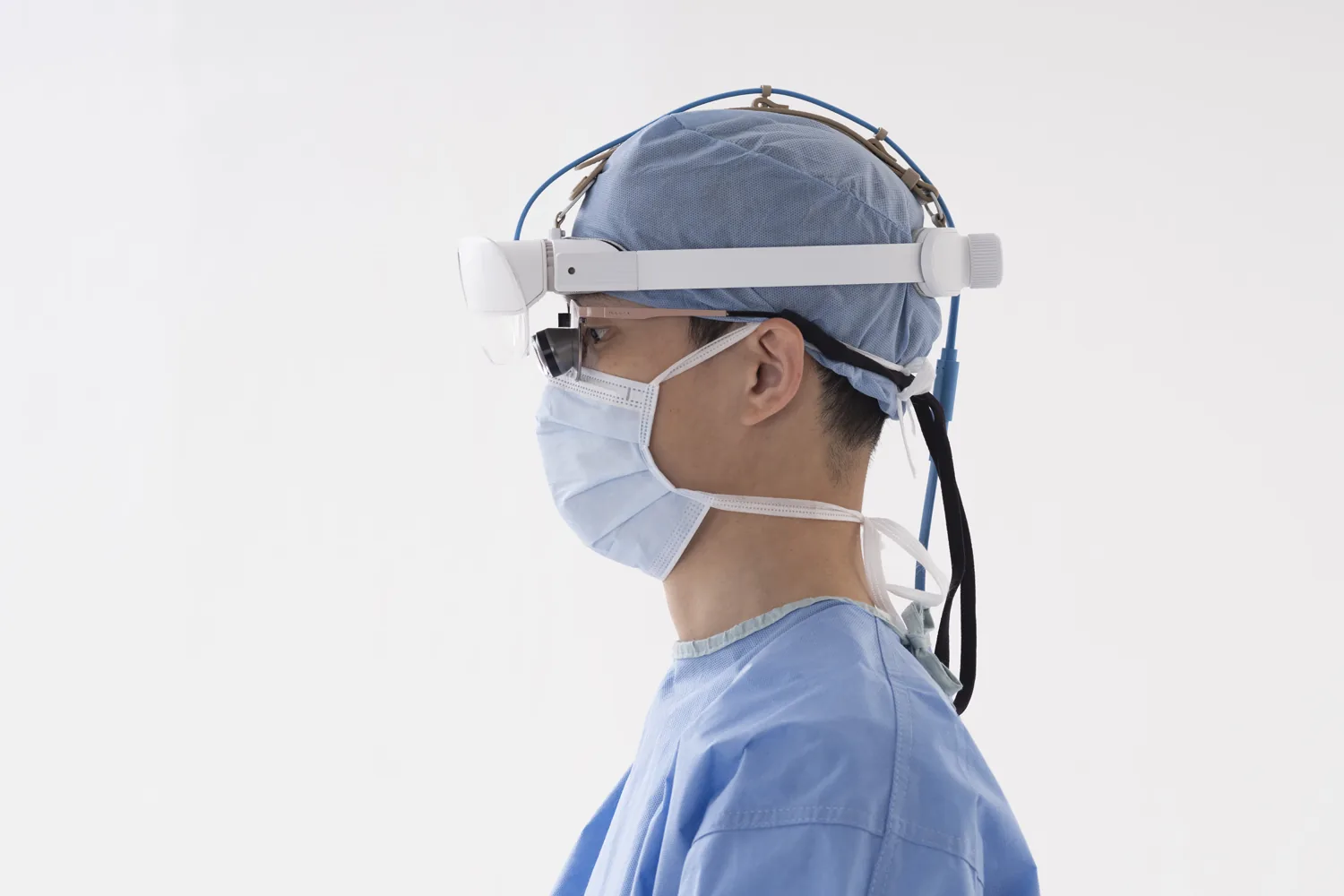
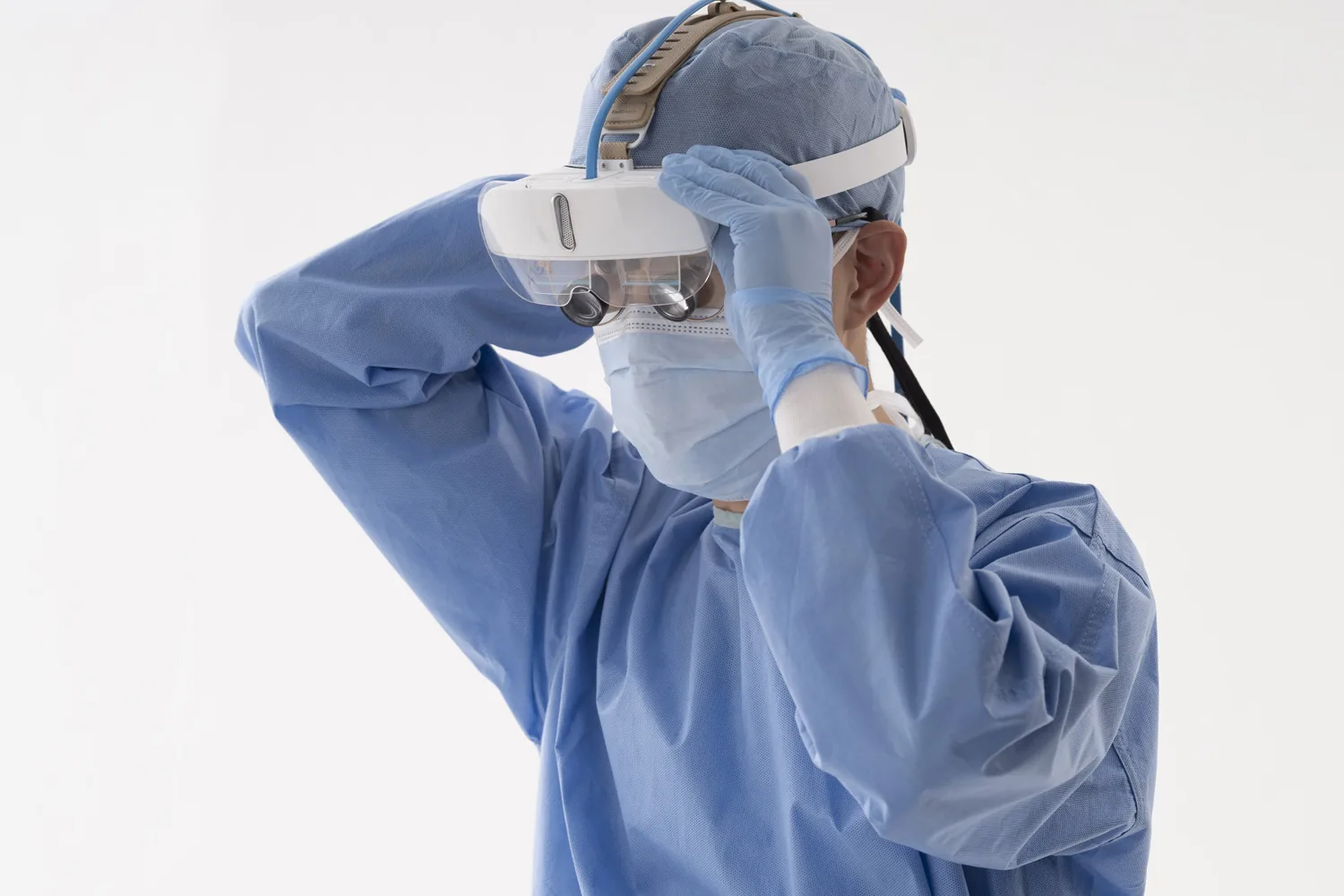
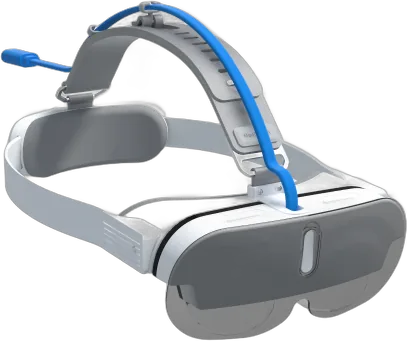
Both have a 1920 × 1080 micro-display. SCOPEYE EUD weighs 410 g, has a 40° field of view and a detachable shade. SCOPEYE Feather weighs 295 g, has a 44° field of view, 60 fps and a detachable visor; it is also the display of the 3D Microvision exoscope.
With the 2D and 3D imaging equipment in the room: endoscope, microscope, navigation system or surgical robot. The link is wireless, through a DVI transmitter and receiver, or wired, through the Multi Processor, which combines the left and right channels of a 3D source.
Yes, with the 3D AddON module. The optical divider is mounted on the microscope (ZEISS, Leica, Nikon, Olympus and others), and the control unit sends the 3D image to SCOPEYE over USB-C and to a monitor over HDMI.
Each connection, wireless or wired, supports up to 2 displays. With a LAN hub, the same 2D or 3D image reaches up to 200 users, for example in live broadcasts and anatomy labs.
Product
SCOPEYE
MediThinQ
Fill in the form and we will get back to you shortly, usually within the same working day.
A 3D exoscope on a mobile stand, with up to 20× zoom, autofocus and LED illumination. The surgeon sees the stereoscopic Full HD image on the SCOPEYE Feather display instead of through an eyepiece.
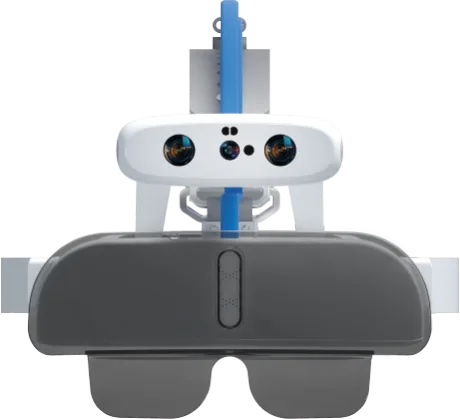
Head-worn 3D digital loupes: a stereoscopic camera with autofocus and 2-5× (3DMS-1) or 4-9× (3DMS-2) zoom shows the magnified image on a binocular Full HD display with a 40° field of view.