
Nexon Medical
EnSight Biportal
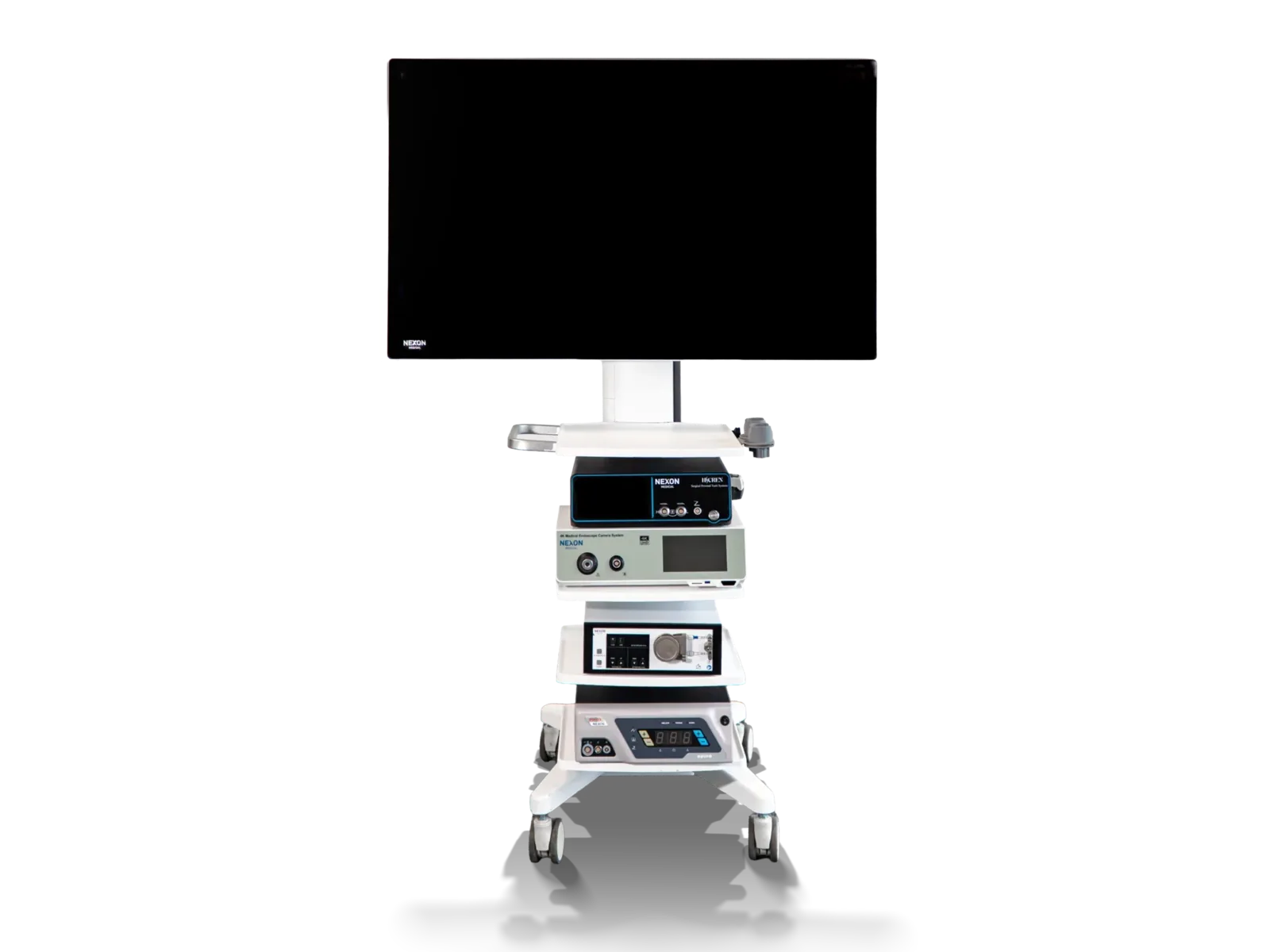
A complete solution for unilateral biportal endoscopic spine surgery (UBE): 4K endoscopic tower, Plasma and RF electrodes, dedicated instruments and an endoscopic drill.
Product page


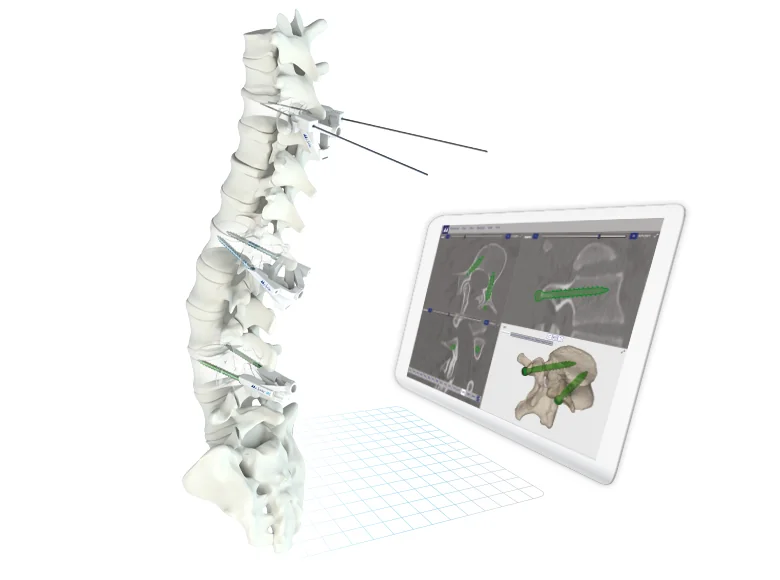
Patient-specific 3D-printed surgical guides that direct pilot-hole preparation for posterior fixation screws from C2 down to the sacrum and ilium, following a plan made by the surgeon on the patient’s CT scan.
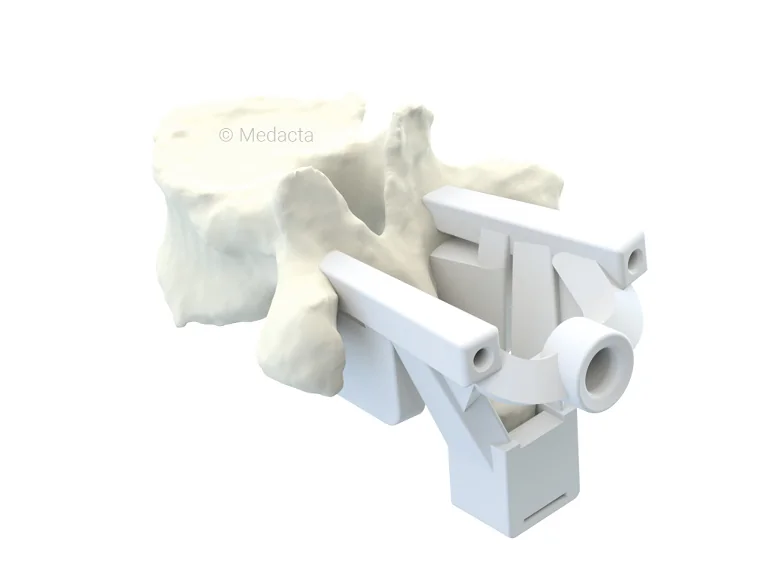
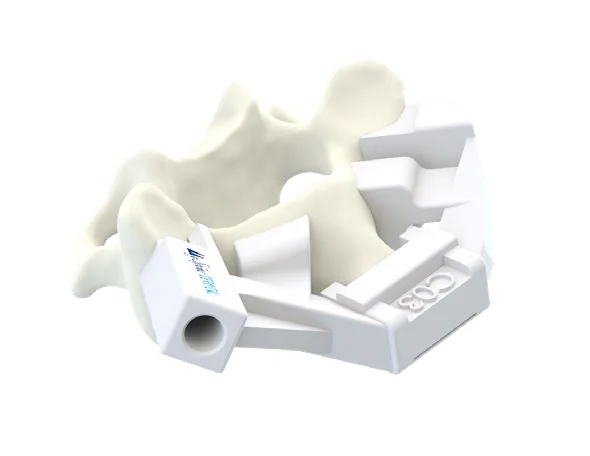
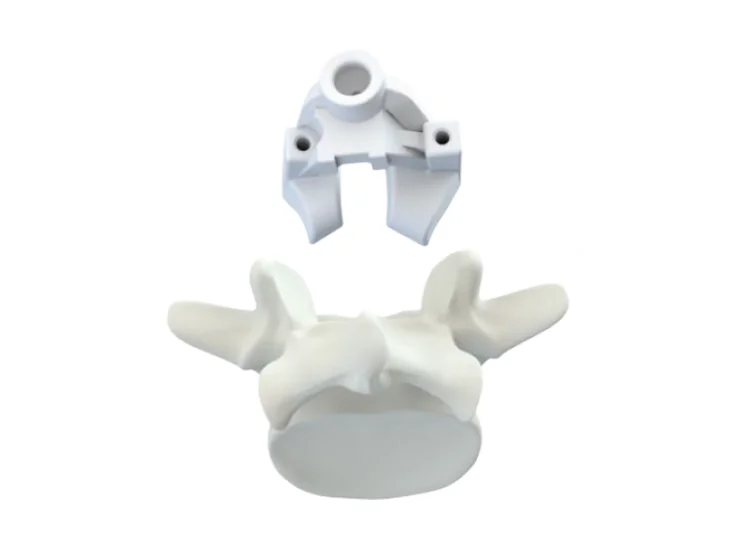
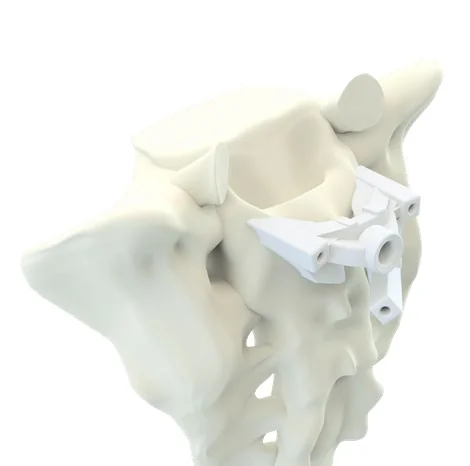
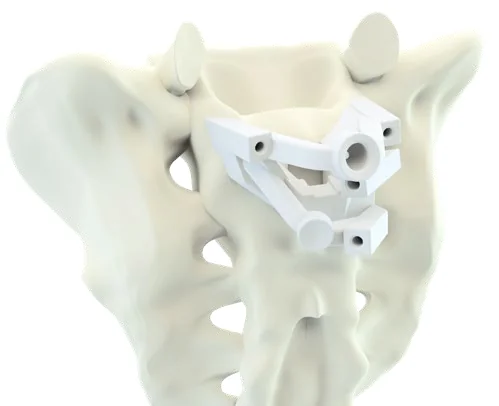
MySpine turns the CT scan of the patient’s spine into a 3D preoperative plan and into anatomical drilling guides used once, for a single patient. In the MySpine Webplanner the surgeon sets the entry point, trajectory, diameter and length of each screw. The guide rests on the vertebra at several contact points on distinct anatomical landmarks, such as the spinous and transverse processes, and distal windows keep the operative field in view at every step.
The patient has a CT scan under the low-dose MySpine protocol, and the data are sent securely to Medacta, which reconstructs the anatomy in 3D. Once the surgeon has reviewed and approved the plan, the guides and plastic vertebral models are 3D printed. The surgeon receives them before surgery and can rehearse the placement of each guide on the model. Cases are managed entirely online, with no software to install, and for the first procedures the surgeon can ask for a Medacta proctoring surgeon through the M.O.R.E. programme.
The guides are designed for Medacta’s M.U.S.T. screw systems and their instruments. MySpine is part of the MySolutions ecosystem, alongside the NextAR platform, and the MySpine preoperative planning suite is also used by NextAR Spine. In a clinical study cited by the manufacturer (Van Royen et al., European Spine Journal, 2021), superimposing CT scans on the planned trajectories in thoracolumbar deformity surgery showed a mean deviation of 0.92 mm and 2.92°.
| Imaging | CT scan under the low-dose MySpine protocol |
|---|---|
| Planning | MySpine Webplanner, online, no installation |
| Planned parameters | Entry point, trajectory, screw diameter and length |
| Manufacturing | 3D printing: guides and vertebral models |
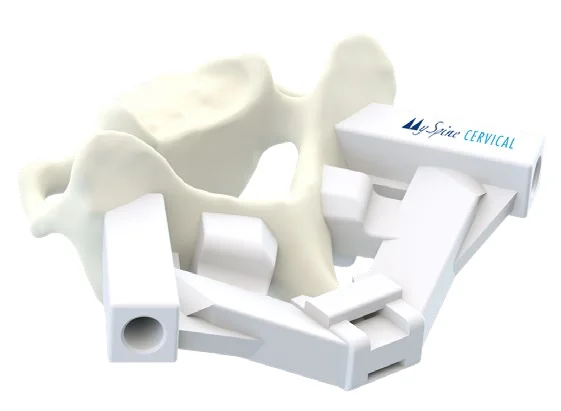
| Cervical | C2-C7; bilateral or monolateral guide |
| Thoracolumbar | T1-L5; Standard or Low Profile, K-wire- or drill-based |
| Lumbar, midline cortical trajectory | L1-S1 (MySpine MC) |
| Sacral | S1 and S2AI; Anchor |
| Screw systems | M.U.S.T. MINI (cervical), M.U.S.T. and M.U.S.T. MC (thoracolumbar), M.U.S.T. SI (sacroiliac) |
| Use | Single patient, single use |
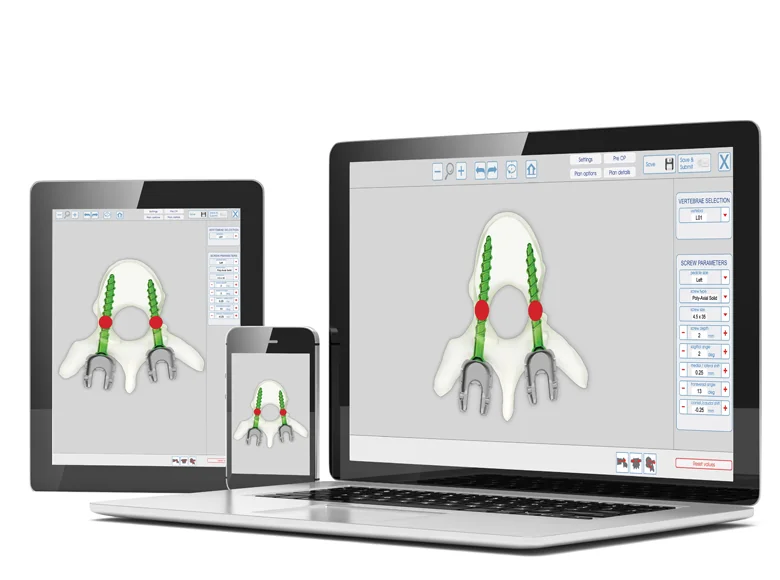
The surgeon. In the MySpine Webplanner, on the 3D reconstruction of the CT scan, the surgeon chooses the entry point, trajectory, diameter and length of each screw. The guides are designed and printed only after the surgeon has approved the plan.
The patient-specific MySpine guides and a plastic model of each treated vertebra, both 3D printed. The model can be used to rehearse guide placement before the procedure.
From C2 down to the sacrum and ilium. MySpine Cervical covers C2-C7, the thoracolumbar guides T1-L5, MySpine MC the L1-S1 segment on a midline cortical trajectory, and MySpine S2AI and MySpine Anchor posterior sacroiliac fixation.
Both belong to Medacta’s MySolutions ecosystem. NextAR Spine uses the MySpine preoperative planning suite but guides the surgeon through augmented reality, whereas MySpine turns the plan into physical 3D-printed guides that sit on the vertebra.
Product
MySpine
Medacta
Fill in the form and we will get back to you shortly, usually within the same working day.
A complete solution for unilateral biportal endoscopic spine surgery (UBE): 4K endoscopic tower, Plasma and RF electrodes, dedicated instruments and an endoscopic drill.
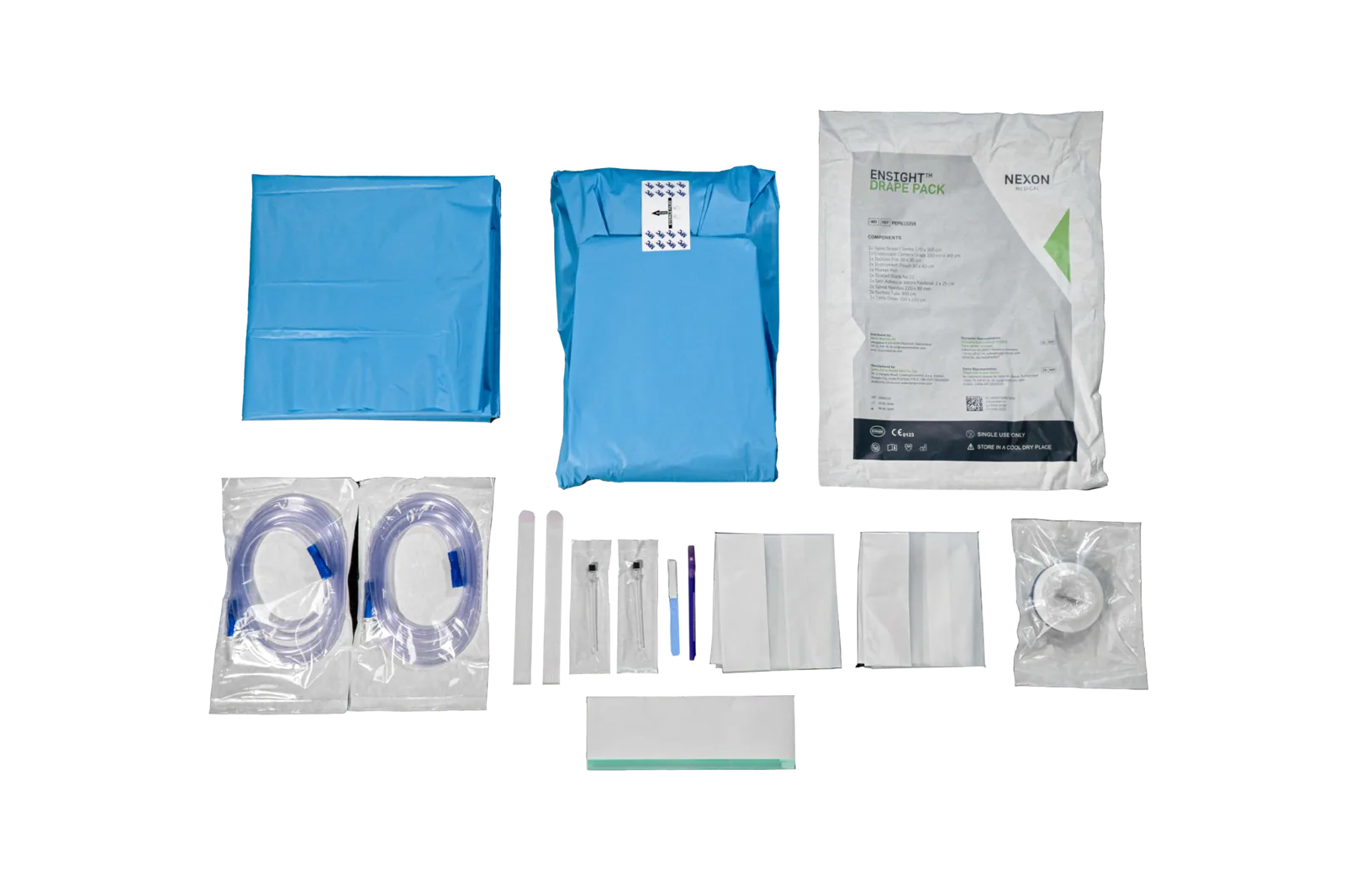
A complete sterile set for biportal and monoportal spinal endoscopy: drapes, camera cover, fluid collection and the small instruments needed, in a single pack.
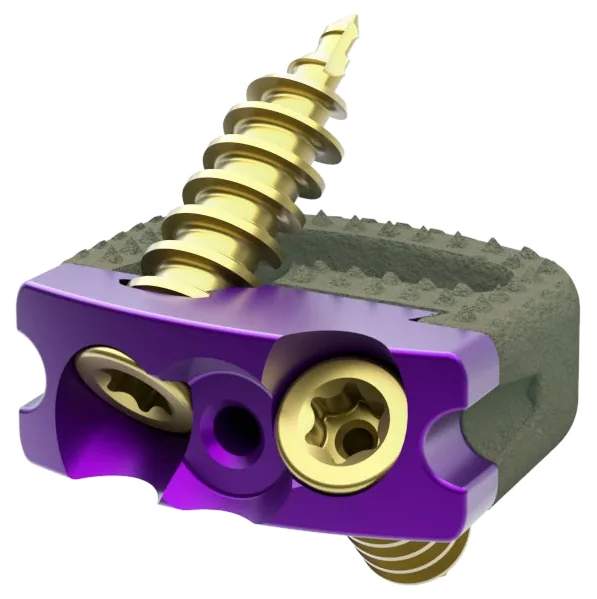
A modular anterior cervical fusion (ACDF) system that combines a TiPEEK interbody cage with an anterior plate: 4 plate types, rigid or variable fixation, 8 configurations.